The Mumbai–Pune 'Missing Link' is open. Here is what it quietly does to property prices from Panvel to Lonavala
A ₹6,700-crore bypass has taken the Khandala ghat out of the Mumbai–Pune drive. The 30 minutes it saves are already being priced into land on both sides of it.
Facts and figures as of 2 November 2026.
What actually changed on 1 May
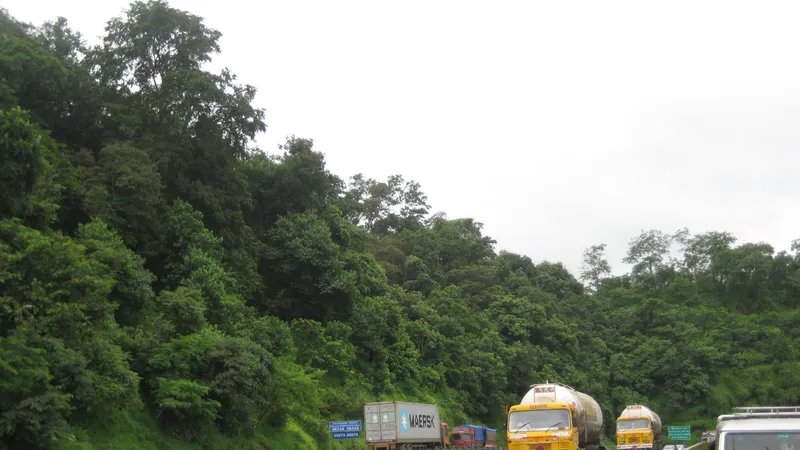
For two decades the Mumbai–Pune Expressway had a flaw everybody who drives it knows: the Khandala ghat. A steep, winding stretch with landslides in the monsoon, a disproportionate share of the road's accidents, and the single place where a 94-kilometre expressway turned into a parking lot.
The Missing Link, built by the Maharashtra State Road Development Corporation (MSRDC), removes that stretch from the journey. The 13.3-kilometre, eight-lane corridor runs from near Khopoli to Kusgaon, through two tunnels (the longer one about 8.9 km) and over two cable-stayed viaducts, one of them roughly 182 metres above the valley floor. It opened to traffic on Maharashtra Day, 1 May 2026, and MSRDC puts the time saving at 25 to 30 minutes on a route used by more than 75,000 vehicles a day.
Why a home buyer should care about a road
Property in the Mumbai Metropolitan Region does not appreciate because of what a builder puts inside the compound wall. It appreciates when the time-distance to a job cluster shrinks. A 30-minute cut on the Mumbai–Pune corridor does three specific things:
- Lonavala and Khandala stop being weekend towns. A Hinjewadi or Bandra–Kurla commute that was a two-and-a-half-hour gamble becomes a predictable two hours. Second-home demand turns, slowly, into first-home demand.
- Khopoli and the Karjat–Khalapur belt move inside Mumbai's orbit. This is the end of the link closest to Navi Mumbai, the new airport and Atal Setu. It is where the cheapest land on the corridor sits.
- Panvel's case strengthens. Panvel already sits at the junction of the expressway, the Goa highway, the airport and the proposed Atal Setu connector. Every improvement to the Pune leg makes it a more credible logistics and residential hub.
The part the brokers leave out
Infrastructure rarely produces a clean jump in prices on opening day. The jump happens in the two years before, on announcements and foundation stones, when the people buying are investors. By the time the ribbon is cut, the easy money has usually been made. What the opening does is remove the risk that the project would not be finished, and that is worth something, but it is not a reason to pay a premium that was already built in during construction.
There is also the question of what the Missing Link does not fix. The expressway's entry at Kalamboli and its exit at Ravet are still the bottlenecks they were, and the old ghat route stays open for heavy vehicles and for anyone who misses the turn. Expect the full time saving on a clear afternoon and something less on a Friday evening.
A note on the "world's widest tunnel" claim
Social media clips about the project repeat a line about a world record. MSRDC has described the tunnels as among the widest in the country and claimed a global first for their width. We could not find an independent record-keeping body's certification at the time of writing, so treat the superlative as the contractor's, not ours. The engineering is impressive without it.
What this means for you
If you are considering a flat or plot in Khopoli, Lonavala, Kusgaon or the Panvel belt, run the commute yourself, once, on a weekday, using the Missing Link. Then compare the asking price with what the same configuration cost in that micro-market in early 2025. If the premium is already 15–20% and the seller's only argument is the bypass, the infrastructure has been priced in. Buy on a second reason, not the first.