Noida stalled projects: the UP relief package and what it changed for buyers
Uttar Pradesh's December 2023 order adopted the Amitabh Kant committee's plan for legacy projects in Noida and Greater Noida. What the committee proposed, how the 25% payment works on an illustrative ₹100 crore dues bill, and what it means if your flat is still unregistered.
Rules and rates as of 16 October 2026.
What happened
On 21 December 2023 the Uttar Pradesh government issued an order on implementing the recommendations of the committee chaired by Amitabh Kant, former CEO of NITI Aayog, on legacy stalled real estate projects. The order is listed under that date and subject on the state's Invest UP government-orders page. In August 2025 the Union housing ministry told the Lok Sabha that Uttar Pradesh had issued a policy, Order No. 7774/77-4-2023-6011/2023 dated 21.12.2023, to give relief to homebuyers of stalled projects in Noida and Greater Noida, and that it followed the committee's recommendations.
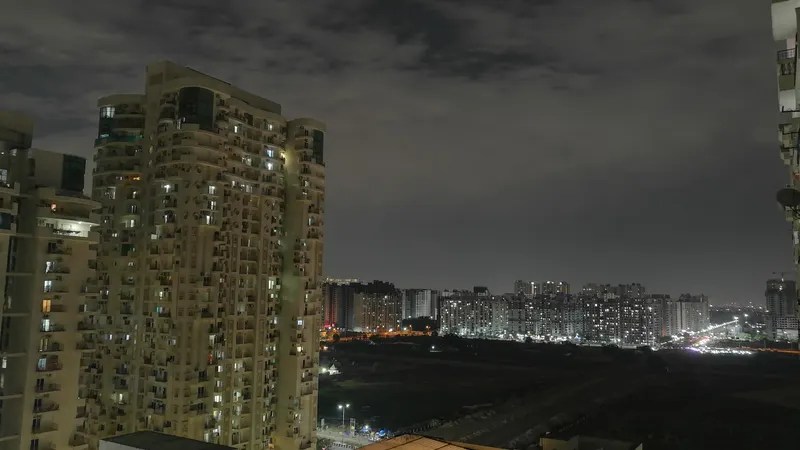
For buyers, the point of the package is simple. Thousands of flats in Noida and Greater Noida were built and often occupied, but never registered in the buyer's name, because the developer owed the land authority money and the authority would not allow sub-lease deeds until it was paid. The package tries to break that deadlock.
Why the projects were stuck
The expert committee was set up by the Centre in March 2023, according to the ministry's reply. Its report, published by the Ministry of Housing and Urban Affairs, found that a lack of financial viability was the main reason legacy projects were not being revived. It cited an Indian Banks' Association estimate of 4.12 lakh stressed homes worth ₹4.08 lakh crore across India, about 2.40 lakh of them in the NCR. It also recorded that about 40,000 homebuyers in the Greater Noida region were living in their flats without executed sub-lease deeds.
What the committee recommended
The report proposed a set of concessions for developers, tied to an obligation to pay up and to register flats:
- Zero period. No interest or penalty for the Covid-19 period, 1 April 2020 to 31 March 2022, and for the period of court orders halting projects within 10 km of the Okhla Bird Sanctuary, 14 August 2013 to 19 August 2015.
- Pay 25% in 60 days. After these concessions, the developer pays 25% of the remaining dues to the authority within 60 days, and the other 75% over three years with simple interest.
- Interest recalculated on the basis of SBI's three-year MCLR as of 1 June 2020.
- Partial land surrender allowed, with dues on the surrendered land waived.
- Co-developers allowed for a whole project or part of it, with the authority informed.
- A fresh three-year time extension at no cost.
- Immediate registration of sub-leases for rightful homebuyers, not made conditional on the builder clearing dues.
An important caution: these are the committee's recommendations. The Centre says Uttar Pradesh's order follows them, but the order itself is published only as a scanned image, which we could not read, and the Noida and Greater Noida authority websites did not allow our reader in. So the exact terms Uttar Pradesh adopted, including whether it kept the recommendation that registration should not wait for the builder's payment, have not been checked line by line for this report.
The 25% payment, worked out
Take an illustrative developer who, after the zero-period concessions, owes an authority ₹100 crore. Assume the balance carries simple interest of 8% a year (an illustrative rate, not the SBI MCLR the committee named) and is paid in three equal annual principal instalments.
- Upfront within 60 days: 25% × ₹100 crore = ₹25 crore
- Balance: ₹100 crore − ₹25 crore = ₹75 crore, paid as ₹25 crore a year
- Year 1 interest: ₹75 crore × 8% = ₹6 crore; payment ₹31 crore
- Year 2 interest: ₹50 crore × 8% = ₹4 crore; payment ₹29 crore
- Year 3 interest: ₹25 crore × 8% = ₹2 crore; payment ₹27 crore
- Total paid: ₹25 + ₹31 + ₹29 + ₹27 = ₹112 crore, of which ₹12 crore is interest
The zero period matters as much as the instalments. The Covid window is 730 days and the Okhla window 736 days, so on a long-running default the concessions remove about four years of interest before the 25% is even calculated.
| Item | Committee recommendation | Illustrative ₹100 crore case |
|---|---|---|
| Covid zero period | 1 Apr 2020 to 31 Mar 2022 (730 days) | Interest for these days removed before dues are fixed |
| Okhla zero period | 14 Aug 2013 to 19 Aug 2015 (736 days) | Same |
| Upfront payment | 25% within 60 days | ₹25 crore |
| Balance | 75% over 3 years, simple interest | ₹75 crore + ₹12 crore interest at 8% |
| Time extension | 3 years, no charge | Not applicable |
What it changed for buyers
The main change is meant to be a route to registration. In the committee's design, a developer who takes the concessions pays up, and buyers' sub-lease deeds are executed so they can pay stamp duty and register. How the state order sequences the payment and the registrations is one of the terms still to be checked against its text. Registration gives a buyer a title document and a cleaner resale.
What it does not do is force a developer to join. Projects whose builders stay out, or are in insolvency, follow other routes; the committee's report deals separately with RERA-led and IBC revivals. And we could not find, on an official page we were able to read, a count of how many registrations the package has unlocked. Figures quoted in the press have not been verified here.
What this means for you
If you live in or own a Noida or Greater Noida flat that is still not registered, ask your developer in writing this week whether the project has joined the state's stalled-projects package, whether the 25% payment has been made, and when the authority will allow sub-lease deeds. Ask the authority's builder or flats department the same question. Keep your allotment letter, payment receipts and possession letter ready, and budget for stamp duty and registration charges. If the developer has not joined, a RERA lawyer can explain the complaint and insolvency routes.
Sources
- Lok Sabha Unstarred Question No. 4636, answered 21 August 2025, Ministry of Housing and Urban Affairs (cites UP Order No. 7774/77-4-2023-6011/2023 dated 21.12.2023)primary
- Ministry of Housing and Urban Affairs, Report of the Expert Committee on Rehabilitation of Legacy Stalled Real Estate Projects (Amitabh Kant committee), 2023primary
- Invest UP, Government Orders listing: order of 21 December 2023 on implementing the Amitabh Kant committee recommendations on legacy stalled real estate projectsprimary
- Government of Uttar Pradesh, order dated 21 December 2023 (scanned PDF via Invest UP)primary