Handover day checklist: snag list, meter readings and the documents to collect before you sign
What to inspect room by room, why the meter readings on the day can be worth thousands of rupees, which documents RERA says you are entitled to, and how to sign the handover form without giving up your snag list.
Rules and rates as of 18 October 2026.
The builder's email gives you a date, a time and a demand letter. On handover day you will be shown the flat, handed a bunch of keys and asked to sign a possession or handover form. That signature is the moment the builder will later point to as the date you took possession. An hour of careful checking before you sign costs nothing. Fixing things after you sign is slower and harder to prove.
This checklist covers what to inspect, what to write down and what to collect on the day. Two related questions have their own explainers on this site: what the occupancy certificate (OC) and the possession letter each prove, and how the five-year defect liability works after you move in. This piece is about the day itself. It is not legal advice.
Why the handover date matters in law
The Real Estate (Regulation and Development) Act, 2016 (RERA) ties several duties to possession and the OC:
- Your duty to take possession (s.19(10)). You must take physical possession within two months of the OC being issued for your flat. So check the OC date before the day; it starts your own clock.
- The builder's duty to pay outgoings (s.11(4)(g)). Until it transfers physical possession, the builder must pay the outgoings it has collected from buyers for that purpose, a list that includes "charges for water or electricity" and maintenance charges. If it has not paid them before handover, it stays liable afterwards. This is why meter readings on the day matter.
- Defects (s.14(3)). The builder must fix defects you bring to its notice within five years "from the date of handing over possession", free, within thirty days. The handover form fixes that start date, and your snag list is the first notice.
- Documents (ss.17, 19(5)). The builder must execute a registered conveyance deed and hand over title documents within the period local law sets, or within three months of the OC if local law is silent (s.17(1)). Under s.19(5) you are entitled to the necessary documents and plans, including of common areas, once physical possession is handed over.
- Plans you can ask for (ss.11(3), 19(1)). The builder must make the sanctioned plans, layout plans and specifications available to buyers, and you have a right to that information.
Before the day
- Ask for a copy of the OC (or completion certificate, by whatever local name) for your tower or wing, and note its date.
- Carry your registered agreement for sale, its floor plan and specification schedule, and the sanctioned plan if you have it. Every snag is easier to argue when you can point to the clause or drawing it breaks.
- Pack a tape or laser measure, a phone charger or socket tester, a spirit level or a marble, a torch, a bucket, masking tape and a pen.
- Go in daylight, and ask for water and power to be switched on before you arrive.
The snag walk, room by room
Mark each defect with masking tape, photograph it with the tape visible, and number it on your list.
- Walls and ceilings: cracks, damp patches, uneven plaster, paint touch-ups hiding seepage. Look hardest at the ceiling below any terrace or bathroom above.
- Floors and tiles: hollow-sounding tiles (tap them), chipped edges, uneven levels. A marble that rolls fast tells you the slope.
- Bathrooms and kitchen: run every tap for a few minutes, flush every cistern, pour a bucket on the floor and watch where it drains. Check under the sink for leaks.
- Doors and windows: every lock with every key, hinges, gaps, glass, window seals. Pour some water on the outside sill if you can, and look for seepage inside.
- Electrical: every switch and socket, the main distribution board, earth leakage breaker, and the bell. Label which breaker runs what.
- Area and specifications: compare fittings, brands and finishes with the specification schedule in your agreement. Measure the rooms; our carpet-area explainer shows how to check the total against the agreement.
- Common areas: lift, fire extinguishers on your floor, staircase lighting, your parking slot's number and position against the allotment.
Meters: the readings that cost money
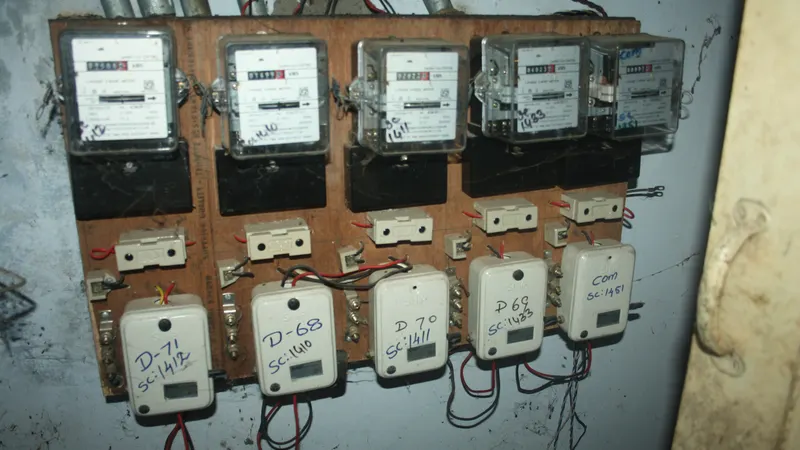
A new flat usually has an electricity meter in the building's meter room, often a power-backup meter run by the builder or the residents' association, and sometimes a water meter. Photograph each meter's reading, serial number and the flat number painted beside it, with the date and time visible. Ask whether the electricity connection is in your name or still in the builder's, and how and when it will be transferred.
The Electricity (Rights of Consumers) Rules, 2020 (G.S.R. 818(E), 31 December 2020) say no connection may be given without a meter, which should be a smart pre-payment or pre-payment meter, and that an application for a new connection needs proof of identity and proof of "ownership or occupancy" of the premises. They set the outer limit for releasing a new connection after a complete application at seven days in metro cities, 15 in other municipal areas and 30 in rural areas. According to the Ministry of Power's release of 23 February 2024, an amendment dated 22 February 2024 cut these to three, seven and 15 days (hilly rural areas stay at 30). We could not open the amended gazette text itself, so treat the shorter limits as reported by the Ministry. The same release says residents of multi-storey buildings can choose, by a ballot conducted by the distribution company, between individual connections and a single-point connection, with grid power, association-supplied backup power and common-area power metered and billed separately.
Worked example: what a missed meter reading can cost
All figures are illustrative; tariffs differ by state and by building. Suppose your meters already show consumption on handover day, because workers used power and water during finishing work:
| Meter | Reading on handover day | Assumed rate | Formula | Amount |
|---|---|---|---|---|
| Grid electricity | 1,240 units | ₹8 a unit | 1,240 × ₹8 | ₹9,920 |
| Power backup (DG) | 310 units | ₹22 a unit | 310 × ₹22 | ₹6,820 |
| Water | 38 kilolitres | ₹25 a kilolitre | 38 × ₹25 | ₹950 |
| Total | ₹9,920 + ₹6,820 + ₹950 | ₹17,690 |
If your first bill counts from zero and you have no dated record, you may find it hard to show that ₹17,690 of use happened before you took possession. With a photograph and a reading written into the handover form, signed by the builder's representative, you have evidence that the use predates possession, the period for which s.11(4)(g) makes the builder liable for outgoings it collected. Whether a particular bill falls within that clause depends on your agreement; ask in writing.
Documents to collect or ask for
- A copy of the OC or completion certificate for your building.
- The possession or handover letter, dated, with your snag list and meter readings attached or referred to.
- Receipts for every payment, and a statement showing nothing is outstanding.
- The list of keys handed over, including the main door, letterbox, meter cabinet and any access cards.
- Warranty cards and manuals for lifts in your flat's scope, fittings, appliances and any waterproofing guarantee the agreement mentions.
- Electrical and plumbing layouts of your flat, so you know where not to drill.
- Written timelines for the conveyance deed (s.17(1)) and for the association's formation and documents.
Signing the handover form
Read the form before you sign. Some forms say you have inspected the flat and are "fully satisfied". If yours does, write beside your signature that possession is accepted subject to the attached snag list, and get a copy of the signed form with that note. Keep your snag list and photographs together with the date. If the builder refuses to accept a qualified signature, put your objection in an email the same day. A lawyer can tell you how far a "satisfied" clause binds you; the s.14(3) duty to fix defects comes from the Act, not from the form.
What this means for you
Before handover day, ask the builder in writing for a copy of the OC for your tower and a copy of the handover form you will be asked to sign. Note the OC date: you have two months from it to take possession. Print your agreement's floor plan and specification schedule. On the day, number and photograph every snag, photograph each meter with its reading and serial number, write the readings into the handover form, and sign 'subject to the attached snag list' if the form says you are fully satisfied. Email the snag list to the builder the same evening so the notice date is on record. If the form's wording worries you, show it to a property lawyer before you sign.
Sources
- Real Estate (Regulation and Development) Act, 2016 (Act 16 of 2016): ss.11(3), 11(4)(g), 14(3), 17, 19(1), 19(5), 19(10) (India Code)primary
- Ministry of Power: Electricity (Rights of Consumers) Rules, 2020, G.S.R. 818(E), 31 December 2020 (rules 4 and 5)primary
- PIB, Ministry of Power: Government amends Electricity (Rights of Consumers) Rules, release of 23 February 2024 (amendment of 22 February 2024)primary