41 buildings razed in Nalasopara: how to check a building is legal before you book a flat
The Bombay High Court refused to protect 41 Nalasopara buildings on land reserved for a sewage plant and dumping ground, and they were demolished. Buyers' registered agreements did not save them. Check the RERA number, sanctioned plan, land use, OC and title with the corporation before you pay.
Rules as of 13 October 2026.
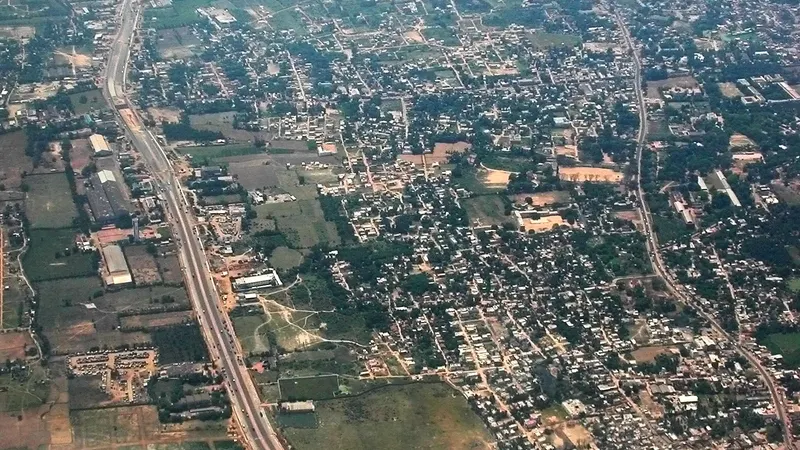
Forty-one residential buildings at Agrawal Nagari in Nalasopara East, built on land reserved for a sewage treatment plant and a dumping ground, have been demolished after the Bombay High Court refused to protect them. Residents say they bought homes in good faith. The legal lesson for a buyer is plain: a registered agreement and years of living in a flat do not make an unauthorised building legal. These are the checks to run before you book.
What the courts decided
In July 2024 the Bombay High Court, in a writ petition about the buildings, refused relief to about 15 flat owners who had approached it after the Vasai Virar City Municipal Corporation (VVCMC) gave 24 hours' notice. Reports say the bench of Justices M.S. Sonak and Kamal Khata called the buildings "wholly illegal and unauthorised", observed that the owners had not shown the buildings were built with the required permissions, and suggested they could seek damages from the builder. Because of the monsoon, demolition was held until 30 September 2024 on condition of undertakings to vacate. A later judgment of the same High Court, in October 2025 in a different matter, records that the July 2024 order directed action against the illegal structures and that the buildings were afterwards removed. In that judgment, the Enforcement Directorate alleges the 41 buildings were put up between 2008 and 2010 with officials' connivance; those are allegations, and the court's ruling there was only on the legality of an arrest.
Reports say the Supreme Court dismissed the residents' special leave petition in October 2024 (bench of Justices Hrishikesh Roy and S.V.N. Bhatti), leaving the corporation free to proceed and the residents free to ask the government about rehabilitation. We could not read that order. On the demolition dates, reports differ: one says demolition began on 28 November 2024, while a wire report says 34 buildings were demolished on 23 January 2025, with seven having gone earlier. Numbers of those affected also differ between reports, from over 2,500 families to about 8,000 residents.
Why a registered agreement did not help
The Supreme Court's 17 December 2024 ruling in Rajendra Kumar Barjatya shows the same logic from another state. There, shop buyers with registered sale deeds still had to vacate and the construction was ordered demolished. The Court said passage of time and money spent cannot legitimise an unauthorised building. That judgment also directs that banks should lend against a building only after verifying its completion or occupation certificate.
How long the system took to act
Reports describe a slow process. They say construction began around 2006, some structures were demolished between 2010 and 2012, show-cause notices were issued in July 2021, and eviction notices came in 2024. The High Court is reported to have criticised the civic body for slow action. For a buyer, this matters in one way: the absence of action for years is not a sign of legality. Enforcement can arrive long after you have paid, moved in and furnished the flat. Authorities that issue completion certificates wrongly can face departmental action under the Supreme Court's December 2024 directions, but that does not restore the buyer's flat.
Worked example: what a buyer stands to lose
Take a 1BHK bought for ₹25 lakh (illustrative). If the building is demolished, the money you paid is not recovered automatically; the reported High Court suggestion was a damages claim against the builder, which depends on finding and winning against him. If you then rent a similar home at ₹12,000 a month for five years, you spend another ₹7.2 lakh, so the total outflow is ₹32.2 lakh with no home. If you took a loan, the EMI continues. This is an illustration, not a prediction for any actual family.
Checks before you book
| Check | What to look for |
|---|---|
| RERA registration | The Ministry of Housing and Urban Affairs FAQ says a promoter must register a project with the state Authority before advertising or selling, and that the Authority keeps a public website listing registered projects. Ask for the registration number and check it yourself. |
| Small-project exemption | The FAQ lists exemptions: land up to 500 sq m or up to eight apartments. A building with no RERA number may be exempt, not necessarily illegal, but it needs more checks. |
| Sanctioned plan and permits | Ask for the approved plan and commencement certificate from the municipal corporation and confirm with the corporation, not only from the builder. |
| Land use | Ask the corporation's town planning section whether the plot is reserved for a public use in the Development Plan. At Agrawal Nagari the land was reserved for a sewage plant and dumping ground. |
| Occupancy Certificate | For a ready building, ask for the OC. The FAQ explains that an OC relates to occupying the building, which needs water, sanitation and electricity. |
| Title | Have an advocate check the title chain and land records. Police have alleged forged documents in this case, as reported. |
If you have already bought in a doubtful building
Do not wait for a notice. Collect your agreement, receipts, payment proofs and the builder's contact details now. Ask the municipal corporation in writing what permissions exist for the building. If you find a gap, speak to an advocate about a complaint against the builder, because in the Nalasopara matter the court's suggestion to the owners was a damages claim against the developer. If you already hold a notice, do not ignore the deadline: the courts here gave residents time only for the monsoon, and only against undertakings to vacate.
Red flags
- The seller only shows the registered agreement, not the sanction and OC.
- No RERA number in the advertisement for a building that is not clearly exempt.
- A price far below nearby buildings, with cash demanded.
- The builder cannot be traced or has several projects stalled.
- Hearsay that "the corporation will not act". In Nalasopara it did, after years.
Mistakes to avoid
- Treating a home loan sanction as proof of legality; banks are directed to verify OC but may not catch land-use issues.
- Believing that a long stay protects you. The Supreme Court has said it does not.
- Paying in cash without a receipt linked to the agreement.
This article explains the law and does not replace advice from an advocate.
What this means for you
This week: (1) For any flat you are considering, get the MahaRERA registration number and verify it on the Authority's website yourself. (2) Ask the municipal corporation, not the builder, for confirmation of the sanctioned plan, commencement certificate and land-use status. (3) For a ready building, ask for the OC and check which floors it covers. (4) Do not pay a booking amount in cash. (5) Have an advocate check the title before you sign the agreement.
Sources
- Anilkumar Khanderao Pawar v. Directorate of Enforcement, Bombay High Court, 15 Oct 2025 (records July 2024 order and removal of the 41 buildings)primary
- Rajendra Kumar Barjatya v. U.P. Avas Evam Vikas Parishad, Supreme Court, 17 Dec 2024primary
- Ministry of Housing and Urban Affairs, RERA Act FAQ (registration, OC, exemptions)primary
- Rentu, 10 Jul 2024: Bombay High Court denies relief to 41 illegal Vasai buildingsreport
- ANI, 23 Jan 2025: VVMC drive against illegal buildings in Nalasoparareport
- PropNewsTime: Supreme Court clears way for demolition of 41 buildings (Oct 2024)report