
Legal heir certificate vs succession certificate: what a bank or housing society can ask for
A legal heir certificate comes from the Tahsildar; a succession certificate comes from a District Judge. What each proves, the RBI's ₹15 lakh and ₹5 lakh limits below which a bank must settle without a court certificate, what a Maharashtra society must accept, and the compensation if a bank is late.
Rules and rates as of 25 October 2026.
Two certificates that are often confused
When a parent dies without a nomination or a will, the family is usually asked for proof of who the heirs are. Two documents come up: a legal heir certificate and a succession certificate. They sound alike, but they come from different offices, take different amounts of time, and carry very different legal weight.
This explainer sets out what each one is, what the Reserve Bank of India now tells banks to accept, and what a housing society can ask for. It is general information. If there is any disagreement in the family, talk to a lawyer before applying for either.
The succession certificate: a court document for debts and securities
A succession certificate is granted by a court under Part X of the Indian Succession Act, 1925. Section 372 says the application is made "to the District Judge by a petition signed and verified". The petition must state when the person died, where they ordinarily lived, their family and near relatives, the right in which the petitioner claims, and the debts and securities for which the certificate is wanted.
Under section 373, if the judge finds grounds to entertain the application, a hearing date is fixed and notice is given, and the judge decides the right to the certificate in a summary manner. Where the question is too intricate for that, the judge may still grant it to the applicant who appears to have "prima facie the best title".
Two points matter for families:
- It covers debts and securities. Think bank balances owed to the deceased, shares, debentures and government securities. Section 370(2) defines "security" for this purpose and includes shares of a company or other incorporated body.
- It protects whoever pays. Section 381 says the certificate is "conclusive as against the persons owing such debts or liable on such securities" and gives them full indemnity for payments made in good faith to the holder. That is why institutions like it: once they pay the holder, they are off the hook.
Section 370(1) also says a certificate cannot be granted for a debt or security where the right has to be established by probate or letters of administration. So where there is a will, the route is usually different.
The legal heir certificate: a revenue office document
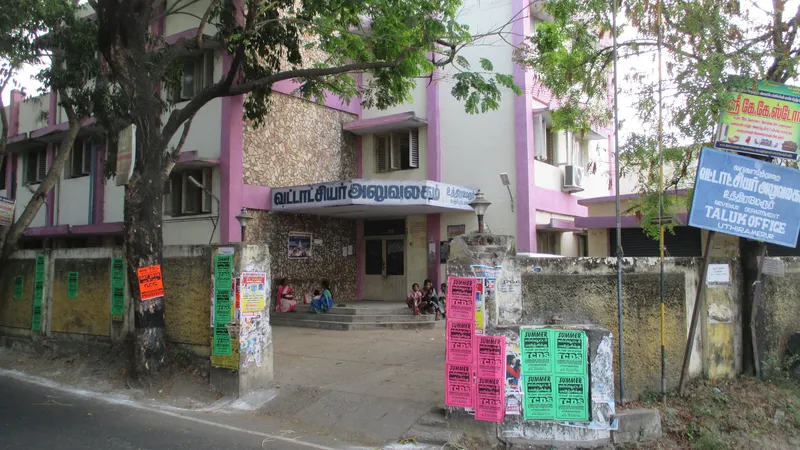
A legal heir certificate is issued by the state's revenue department, usually by the Tahsildar, after a local enquiry. It is not created by any central Act, and each state runs its own scheme. Names and procedures vary.
Tamil Nadu shows how it works. In Shakila Banu v. Additional Chief Secretary (Madras High Court, Madurai Bench, 12 January 2022), the court noted that there is "no provision" in the Registration of Births and Deaths Act, 1969 "or any other Act or Rules" empowering revenue authorities to issue these certificates; the power comes from government orders and circulars. The court quoted a 1991 government letter describing the certificate as "not valid in any court of law". The circular it quoted told Tahsildars not to issue one in certain cases, including where there is a dispute over partition of the deceased's properties, and the court said that where there are rival claimants, the parties should resolve the issue "before the competent Civil Court".
A later order, R. Umasankari v. Tahsildar (Madras High Court, 5 February 2026), refers to the current Tamil Nadu scheme: G.O.(Ms) No. 478 of 29 September 2022, as amended by G.O.(Ms) No. 110 of 13 March 2024 to let Class-II heirs, such as siblings, obtain the certificate. The court directed the Tahsildar to hold an enquiry instead of rejecting a Class-II heir's application outright.
In short, a legal heir certificate is quicker and cheaper, but it records who the heirs appear to be after an administrative enquiry. It does not decide a dispute, and it does not give the payer the statutory protection that section 381 gives for a succession certificate.
What a bank must accept
The RBI's Settlement of Claims in respect of Deceased Customers of Banks Directions, 2025 (26 September 2025, to be implemented by 31 March 2026) now set out what banks can ask for. They apply to commercial and co-operative banks.
- Nominee or survivor on the account. The bank should not insist on a succession certificate or similar legal documents, whatever the amount.
- No nominee, no will, no dispute, below the threshold. The threshold is ₹15 lakh for a commercial bank and ₹5 lakh for a co-operative bank, or a higher limit the bank sets, counting accrued interest. The bank settles on a claim form, death certificate, ID, an indemnity bond, no-objection letters from other heirs, and either a legal heir certificate or a declaration about the heirs from an independent person known to the family. No third-party surety is allowed at this level.
- Above the threshold. The bank may settle on a succession certificate, or a legal heir certificate, or a sworn affidavit from an independent person, and may ask for a surety bond.
A bank must settle a deposit claim within 15 calendar days of getting all the documents. If it is late for reasons of its own, it pays interest of at least the Bank Rate plus 4% a year for the period of delay. The Bank Rate has been 5.75% since 7 October 2026, so the floor is 9.75%.
A worked example
A father dies with ₹12 lakh, including accrued interest, across a savings account and a fixed deposit at a private bank. There is no nominee, no will and no dispute between his widow and two children.
Which route? ₹12 lakh is below the ₹15 lakh threshold, so the simplified procedure applies. A legal heir certificate or the independent person's declaration is enough; a succession certificate is not needed.
If the bank is late. Say the family hands in the last document on 2 November 2026. The 15-day deadline is 17 November. If the bank pays only on 7 December, and the delay is its fault, the delay is 20 days. Minimum compensation = amount × (Bank Rate + 4%) × days ÷ 365 = ₹12,00,000 × 9.75% × 20 ÷ 365 = ₹6,411, rounded to the nearest rupee. This assumes the Bank Rate is still 5.75% on 2 November, which the directions fix as the reference date.
| Point | Legal heir certificate | Succession certificate |
|---|---|---|
| Issued by | Tahsildar or other revenue officer | District Judge |
| Legal basis | State government orders | Indian Succession Act, 1925, Part X |
| Process | Administrative enquiry | Petition, notice, summary hearing |
| Protection for the payer | None in statute | Conclusive and full indemnity (s. 381) |
| Bank deposit claim, commercial bank | Enough below ₹15 lakh; one option above | One option above ₹15 lakh |
| Bank deposit claim, co-operative bank | Enough below ₹5 lakh; one option above | One option above ₹5 lakh |
What a housing society can ask for
Societies are governed by state law, so the answer depends on where the flat is. In Maharashtra, section 154B-13 of the Maharashtra Co-operative Societies Act, 1960, added in 2019 for housing societies, says the society shall transfer a deceased member's share and interest on the basis of "testamentary documents or succession certificate or legal heirship certificate or document of family arrangement", or to a duly nominated person. A nominee is first admitted only as a provisional member. So in Maharashtra a legal heir certificate is one of the accepted documents; the society cannot insist on a succession certificate alone.
Remember that neither certificate is a title deed to the flat. Ownership of the flat itself follows the will or the succession law, and the society's records follow that.
What this means for you
If a parent has died without a nominee or will, first list every bank account and fixed deposit with its balance including interest, and note whether each bank is commercial or co-operative. Below ₹15 lakh at a commercial bank (₹5 lakh at a co-operative bank), ask the bank for its deceased-claim forms under the RBI's 2025 directions; a legal heir certificate or an independent person's declaration is enough. Apply to your Tahsildar for the legal heir certificate if you need one. Note the date you hand in the last document: the bank has 15 days, after which delay attributable to it carries interest of at least the Bank Rate plus 4%. If any heir disagrees, or the amounts are large, speak to a lawyer about a succession certificate before signing indemnities.
Sources
- RBI: Reserve Bank of India (Settlement of Claims in respect of Deceased Customers of Banks) Directions, 2025, RBI/2025-26/82, DoR.MCS.REC.50/01.01.003/2025-26, 26 September 2025primary
- RBI: Governor's Statement, 7 October 2026, Press Release 2026-2027/1266 (Bank Rate 5.75%)primary
- Indian Succession Act, 1925, Part X, s. 373 (procedure on application), text via Indian Kanoon; ss. 370, 372, 381 at indiankanoon.org/doc/1494917, /105862, /169406primary
- Madras High Court (Madurai Bench): Shakila Banu v. Additional Chief Secretary, W.P.(MD) No. 2356 of 2021 and batch, 12 January 2022primary
- Madras High Court (Madurai Bench): R. Umasankari v. Tahsildar, Srivilliputhur, W.P.(MD) No. 3170 of 2026, 5 February 2026primary
- Maharashtra L.A. Bill No. XVII of 2019 amending the Co-operative Societies Act (s. 154B-13), copy hosted by PRS Legislative Researchother